The first time I suggested instant coffee for a camping trip, Dana didn't say anything. She just looked at me for a long moment, the way you'd look at someone who suggested bringing the cat. Then she called her mother.
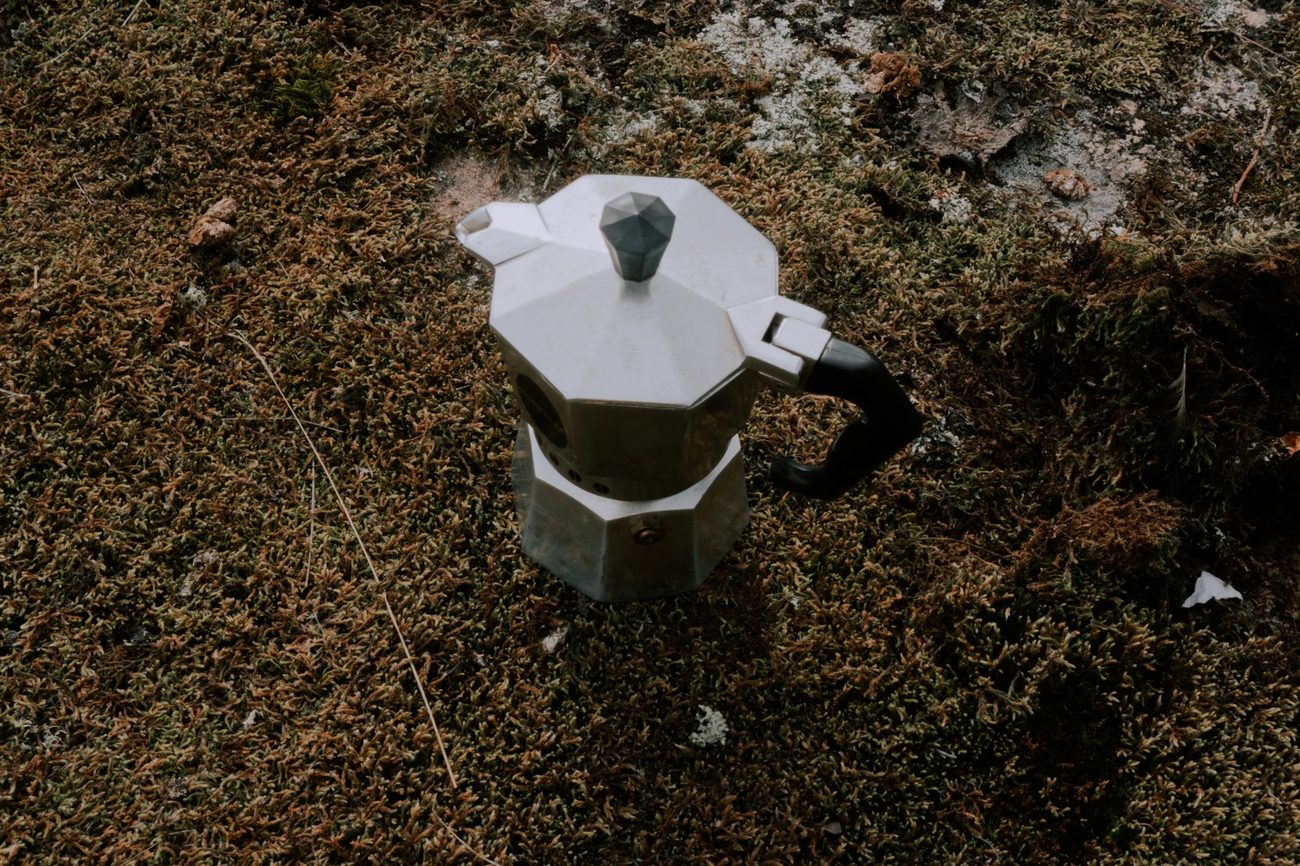
That's how Marisol's old cafetera came camping with us. It's a six-cup aluminum stovetop pot, the kind with a bottom chamber for water, a little funnel basket for the coffee and a top chamber where the coffee comes up. Marisol made coffee in it every morning for something like twenty years, until Dana's brother, Javi, gave her a new one for Christmas. The old one has a dented base, a black handle with one slightly melted corner (I'll explain) and a lot of mornings in it. It has made the coffee on every trip we've taken since our first night at Long Pine Key in 2023.
What we bring
- The cafetera, wrapped in a sock so it doesn't rattle against the skillet.
- Our Coleman two-burner propane stove. I like the click of the igniter at 6:30 a.m. more than is reasonable.
- A brick of finely ground Cuban-style espresso from Publix. One lasts about two weekend trips.
- Sugar, more than you'd think.
- A quart of whole milk in the cooler.
- A small pot for the milk, a small metal cup for the sugar and a spoon.
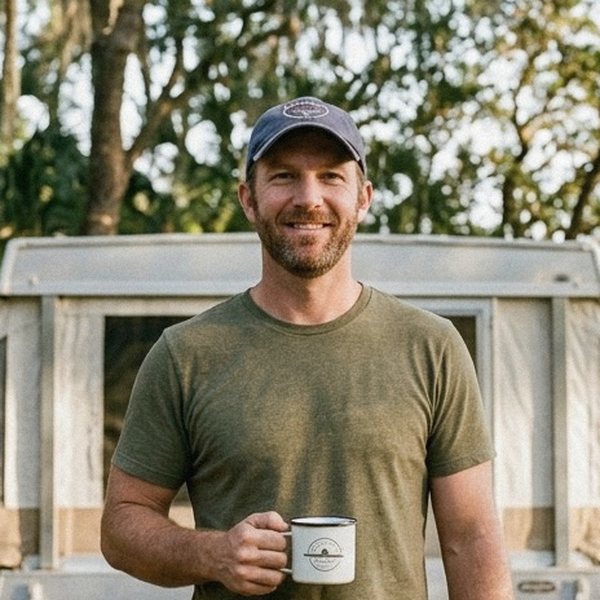
- The white enamel mugs my mom, Linda, gave us for Christmas in 2023. Four of them, though the kids' mugs hold hot cocoa.
How Dana makes it
I cook most of our camp meals. Not the coffee. These are Dana's steps, and Marisol's before her.
- Water in the bottom, filled to just under the little valve on the side. Never over it.
- Coffee in the basket, filled to the top and leveled with a finger. Don't pack it down. Dana says packing it is how you ruin it, and she says this looking at me.
- Screw it together tight and set it over a small flame, no wider than the base of the pot.
- Sugar in the cup. For a six-cup pot, Dana uses about four heaping spoonfuls.
- Catch the first drops. The first few spoonfuls of coffee to come up are the strongest. Dana pours them over the sugar and beats it hard with the spoon until it turns into a thick, pale tan paste. That's the espumita, the foam on top of real Cuban coffee, and it's the step both kids fight to help with.
- Finish and stir. When the pot gurgles and sputters, it comes off the heat, the rest of the coffee goes into the sugar paste, and a layer of foam rises to the top.
That's a cafecito, and Dana drinks one in a tiny cup while the milk heats. For café con leche, I warm the milk in the small pot on the second burner until it steams, never boils. Each enamel mug gets about a third coffee and two thirds hot milk. If we brought Cuban bread, I toast buttered slices in the cast-iron skillet and we dunk them. Last month at Long Pine Key, the same pot made one for Walt, the retired camper who jumped our dead battery, and he's now a convert.
Cold mornings and one melted handle
On the 47-degree morning at Long Pine Key, the whole process took about 12 minutes instead of the usual 7. Cold water, a cold pot and a breeze across the stove. Folding up the stove's side flaps and standing a cutting board on the open side helped. Dana stood next to it with her hands wrapped around an empty mug, waiting, and I've never seen anyone happier about a sputtering aluminum pot.
Now, the handle. On spring break last year at Jonathan Dickinson, I was in charge of coffee for one morning while Dana slept in. I turned the burner up high to speed things along. The flame climbed the sides of the pot, the handle got too close, and one corner softened and drooped. The coffee tasted burned, too. When I confessed to Marisol, she laughed for a full minute and then told me the rule Dana had already told me: small flame. The pot survived. My reputation took longer.
Why we bother
It's maybe ten extra minutes over instant, and the cafetera asks for a little care. Dana's family rinses it with plain water only, no soap, and dries it fully before it goes back in the kitchen bin, or a white crust forms inside.
But the smell of that coffee in a cold campground at sunrise is the thing all four of us bring up when we talk about trips. Even the kids, who don't drink it, say camp smells like "Abuela's kitchen and smoke." Blue Spring is this weekend. The cafetera is already packed, in its sock.