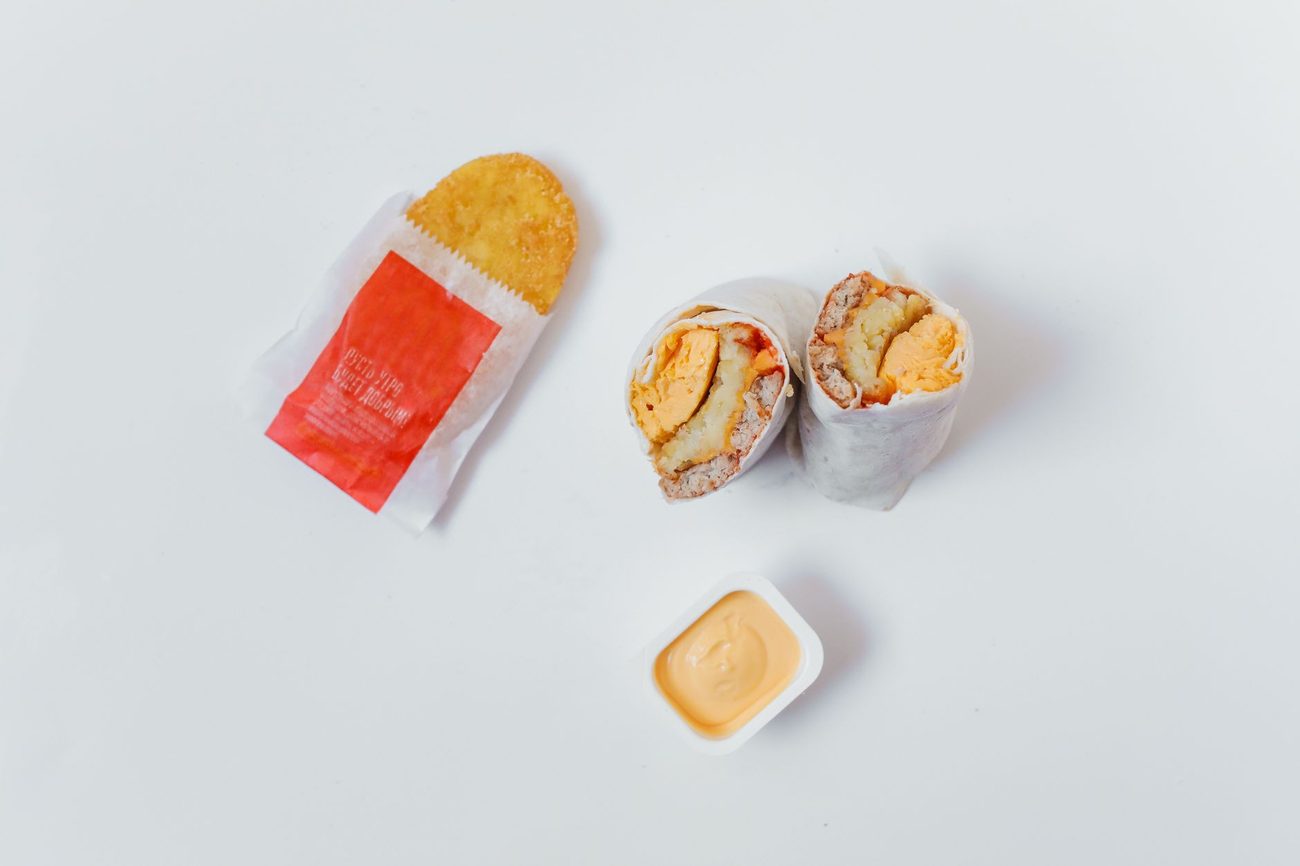
Twelve burritos, one Thursday night, about 50 minutes from the first cracked egg to the last sheet of foil. That's the deal I make with myself before a camping weekend. I give up an evening at home, and in return nobody has to cook breakfast at camp while two kids ask if it's time to go yet.
We started before Blue Spring in February, rolled another batch on a Wednesday night before Curry Hammock because we were leaving Thursday morning, and by now it's just how we do weekend trips. Here's the whole method.
The fillings
For 12 burritos, enough for four of us over three mornings with a couple of spares:
- 12 large flour tortillas, burrito size
- 14 eggs, scrambled soft
- A 1-pound bag of frozen diced potatoes, crisped in the 12-inch skillet
- A can of black beans, drained, rinsed and patted dry
- A pound of breakfast sausage, browned and crumbled
- About 2 cups of shredded cheddar
Nico's four are plain egg and cheese, because he believes anything else in a burrito is a trick. Maya's have everything but the beans. Dana's and mine get everything plus a spoonful of the sofrito Rafael sends home with us in a jar. Salsa and hot sauce ride separately. Anything wet inside the burrito turns the tortilla to paste by the second day.
The whole batch came to about $22 at Publix, a little under $2 a burrito.
The foil method
- Cook everything, then let it cool. This is the step I skipped the first time. Hot fillings steam inside the tortilla, the steam turns to water and the tortilla goes soggy. Now everything cools on sheet pans for 20 minutes while I clean up.
- Warm the tortillas for a few seconds so they fold without cracking.
- Roll tight. Filling in a line just below center, fold in the sides, then roll away from you and keep it snug.
- Wrap in foil, one sheet each, ends twisted.
- Label. Maya does this with colored markers on the foil: N for Nico's, M for hers, and a star on the ones with sofrito.
- Freeze flat on a sheet pan overnight, then pack them in a gallon bag.
At camp
The frozen burritos go in the bottom of the cooler and act as extra ice on the first day. The night before we want to eat them, I move that morning's share to the top so they thaw partway overnight.
To reheat, I leave them in the foil and set them in the 12-inch skillet with the lid on, over low heat on the Coleman stove, turning every few minutes. Partly thawed, they take 12 to 15 minutes. If there's a fire with good coals, they can go right on the grate in their foil for about the same time. For the last two minutes I unwrap them and let them sit in the dry skillet so the tortilla crisps a little. That part is optional. It's also the part the kids notice.
My other mistake, also at Blue Spring: putting a rock-hard frozen burrito over high heat. The outside burned and the middle was still icy. Low heat, patience and an overnight thaw fixed it.
As for how long they keep, our burritos stay cold in a well-iced cooler the whole time, and we eat them in the first two or three mornings of a trip. If one ever sat out warm, it would go in the trash. That's our own habit, not food science, so look up the guidance if you plan to stretch them longer.
Why it's worth an evening
On Saturday at Curry Hammock, we wanted to be on the water in a kayak by 7:15, while the wind was still calm. Breakfast was burritos warmed in the skillet while the cafetera bubbled on the other burner, eaten standing up at the picnic table out of their foil, like little silver logs. Nobody washed a pan. We were at the kayak launch on time, which in our family is rare enough to write down.
The two spares got eaten on the Sunday drive home, somewhere around Key Largo, by the two people in the back seat who had sworn at breakfast that they were full. Dana says that counts as the system working. I agree.