The Overseas Highway crosses 42 bridges between the mainland and Key West. On the drive down to Bahia Honda last month, Maya decided to count the ones we crossed, out loud, from the back seat. She lost count near Marathon and started over, and I was grateful for every number, because counting along with her was easier than thinking about the camper behind me.
Before this trip, my towing experience was short: Homestead to Kendall the evening we picked up the pop-up, some practice loops in an empty Tropical Park lot early on a Sunday, and the 45 or so flat miles to Long Pine Key in February. Bahia Honda is about 120 miles from our house, with the Seven Mile Bridge in the middle. Long Pine Key had been our scrimmage. This was the first one that counted.
How we set up the day
- We left on a Thursday. Our tournament ended Wednesday, and a weekday morning meant less traffic than a Friday afternoon. We pulled out of the carport at 10:15.
- I checked the wind the night before. The National Weather Service forecast for the Keys called for east-southeast winds at 15 to 20 mph with higher gusts. Nothing that worried Dana, which is my real threshold.
- We read the list on the door at the curb. Hitch, chains, lights, latches, tire pressure. Maya called out the blinkers.
- I picked a speed and stuck to it. Nothing over 55, and 50 on the long bridges, no matter who was behind me.
The drive down
The Turnpike to Florida City was the easy part. We stopped at Robert Is Here like we always do, and for the first time I thought about where to park before I thought about the milkshake. I found a spot along the far edge of the lot where I could pull straight out, so nobody had to watch me back up a trailer in front of a crowd. Four milkshakes, back on the road, and Nico was asleep within 20 minutes, as usual.
Then I made my first mistake. I pulled into a gas station in Florida City with tight pumps and a tighter exit, and getting back out took a three-point turn with Dana outside directing me. Now I pick stations I can drive straight through, even if the gas costs a few cents more.
The 18-mile stretch down to Key Largo has a concrete barrier in the middle and not much shoulder, and it's where I first really felt the camper. Every big truck going the other way pushed a little air at us. Through the Upper Keys the challenge was different: traffic lights, 45 mph zones and people braking hard for turns. I left a lot of room, and when a line of eight or nine cars built up behind me in Islamorada, I pulled into a wide parking lot and let them by. Nobody honked. I'll take it.
The Seven Mile Bridge
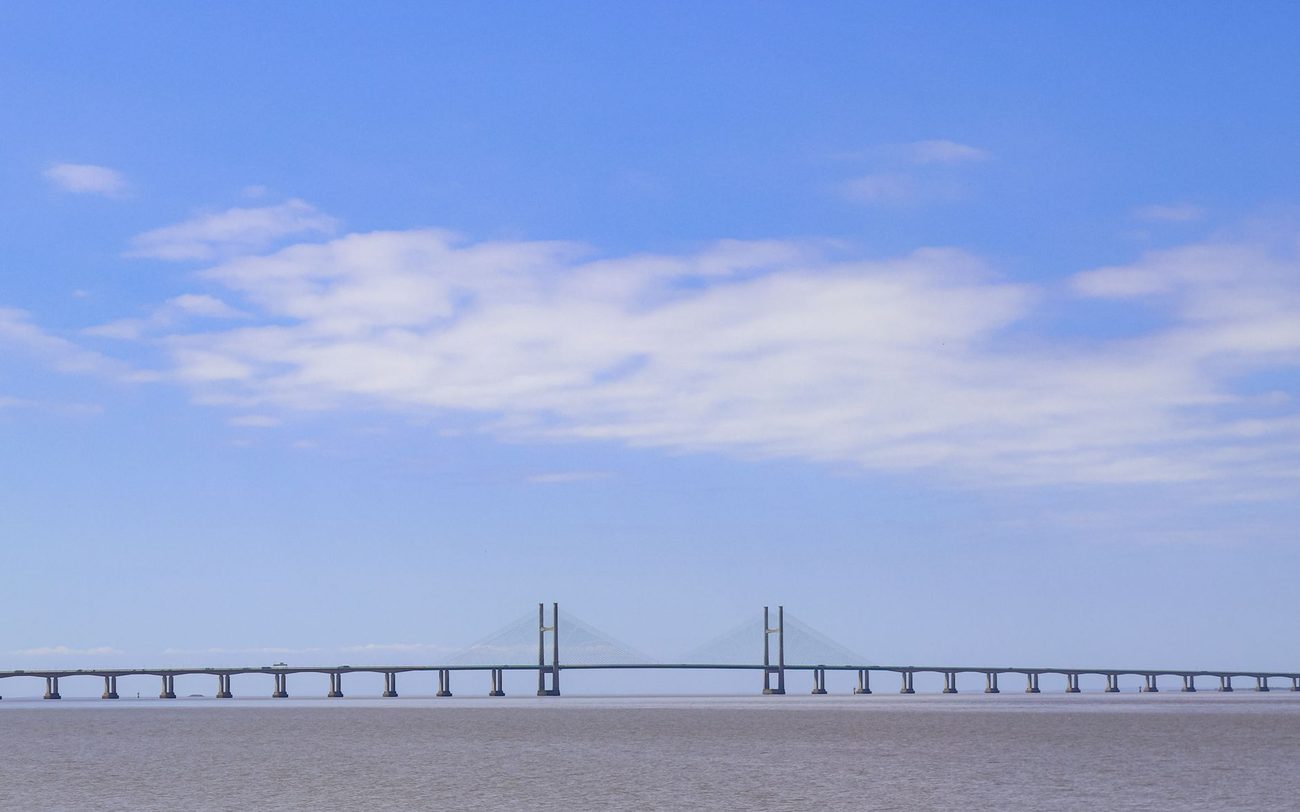
I'd been thinking about this bridge since the day we booked the trip. In practice it was about nine minutes of hands at 9 and 3, the wind coming across from the Atlantic side on my left, and the camper giving a small nudge in a few gusts. It never swayed. A folded pop-up rides lower than the Pilot's roofline, so it doesn't catch much wind, and I could see right over it in the rearview mirror, which nobody had told me and which made me feel a lot better. The water on both sides was that pale Keys green that looks fake in photos. Dana didn't say a word the whole way across. She told me later that was a courtesy.
We pulled into Bahia Honda at 3:10, about five hours door to door for a drive that takes two and a half in the Pilot alone.
The drive home, and what I'd change
Coming home on Sunday was harder. The wind that had pushed us down was now in our face, and the trip computer showed it: about 16 mpg on the way down, a little over 14 coming home. Northbound traffic at the end of spring break was stop-and-go through Key Largo. We broke it up with fish sandwiches in Marathon at a place with a gravel lot big enough to park across the back, and pulled into the carport at 4:30. Gas for the whole trip came to $64.
Next time I'd leave the park by 8 a.m. on the last day and eat lunch at home. I'd also stop losing sleep over the Seven Mile Bridge. It was the gas station in Florida City that got me.