We have thrown away three air mattresses in two camping seasons. I'm not proud of that number, and I'm less proud of the third one, which went flat under Dana and me at about 3 a.m. at Blue Spring last month with the temperature in the low 40s. I woke up with my hip on the tent floor and the cold coming up through it like we'd camped on a block of ice.
Three mattresses, three different endings
- Number one, Long Pine Key, January 2024. The ground in the Everglades pinelands is sharp limestone under a thin layer of needles. Something poked through the tent floor and into the mattress the first night. We patched it. It leaked anyway.
- Number two, Fort De Soto, Memorial Day 2024. A seam split on the second night. That was the weekend with a 76-degree dew point when nobody slept anyway, so in a way it didn't matter.
- Number three, Blue Spring, February 2025. A slow leak somewhere near the valve. We never found it.
They were about $40 each, so roughly $120 of air mattresses are now in a landfill. And even when an air mattress works, it has two problems. It's a big bag of air that takes on the temperature of the night, so at 47 degrees at Long Pine Key in January, ours was the coldest thing in the tent. And it bounces. Every time I rolled over, Dana rolled with me, and she's a light sleeper who works 12-hour shifts.
Why self-inflating pads, and why used
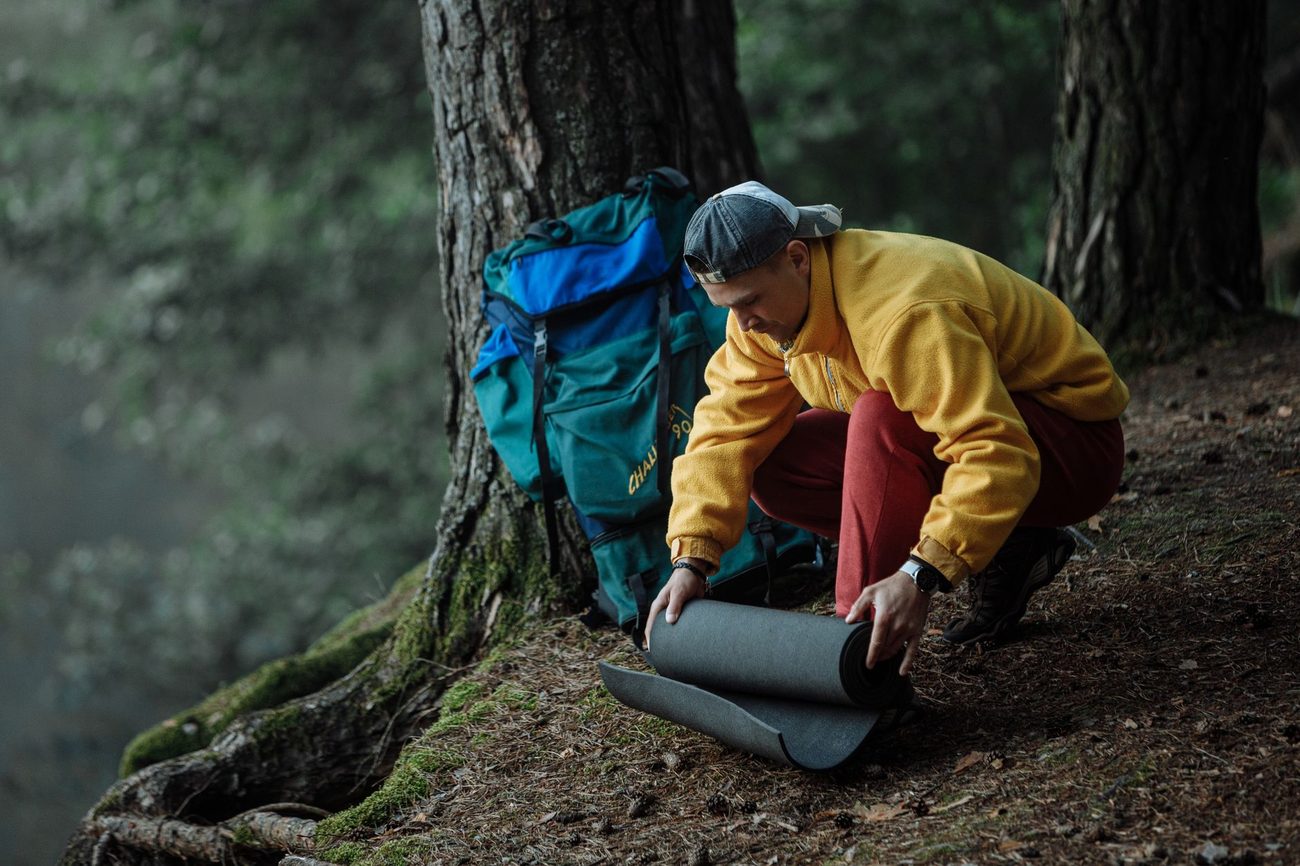
A self-inflating pad is foam inside an airtight shell. Open the valve and the foam expands and pulls air in, then close the valve and top it off with a breath or two. The foam does the insulating, so a cold night doesn't turn it into an ice pack, and two pads side by side don't bounce each other.
Good ones are expensive new, and they're also the kind of thing people buy, use a few times and stash in a garage. So I watched Facebook Marketplace for three weeks. On Saturday, March 1, I drove to Pinecrest and bought two used REI Camp Bed pads from a dad whose kids had left for college and whose camping days were behind him. $60 each. He didn't haggle and I didn't push, because they were in good shape and the price was a fraction of new.
What I checked in his driveway:
- Opened both valves and let them inflate on their own for ten minutes. Both came up full.
- Closed the valves, lay on each one, then sat on them. No sag.
- Pressed along the whole surface for lumps or bubbles, which can mean the foam has come loose from the shell.
- Smelled them. Miami garages are humid, and mildew in a pad is hard to get out.
- Looked closely at the valves for cracks.
One had a small patch on the bottom, which he pointed out before I found it. I liked him more for that. At home, both stayed inflated on the terrazzo in our living room for two nights without losing any firmness.
The backyard verdict
They haven't been on a real trip yet. Curry Hammock is at the end of the month. But last Saturday we put the dome tent up in the backyard for a family sleepout, and Dana and I slept on the pads with a queen fitted sheet stretched over both so they wouldn't drift apart. It was about 64 degrees. Dana slept straight through until 6:30, which has never happened in a tent. I turned over who knows how many times, and she didn't feel any of it.
The kids stay on their foam pads. They're light, the kids don't care, and at their size foam is plenty.
There is a tradeoff. The pads are bulky. Rolled up, each one is about the size of a small sleeping bag, and together they take more room in the Pilot than a deflated air mattress ever did. They're heavier, too. And they're happiest stored unrolled with the valves open so the foam doesn't stay crushed, so they now live flat under our bed, where Pickles has already claimed them.
For $120 total, about what we'd already spent on three air mattresses, I'll give up the cargo space. I turn 38 on Friday, and my back has started voting on gear decisions.