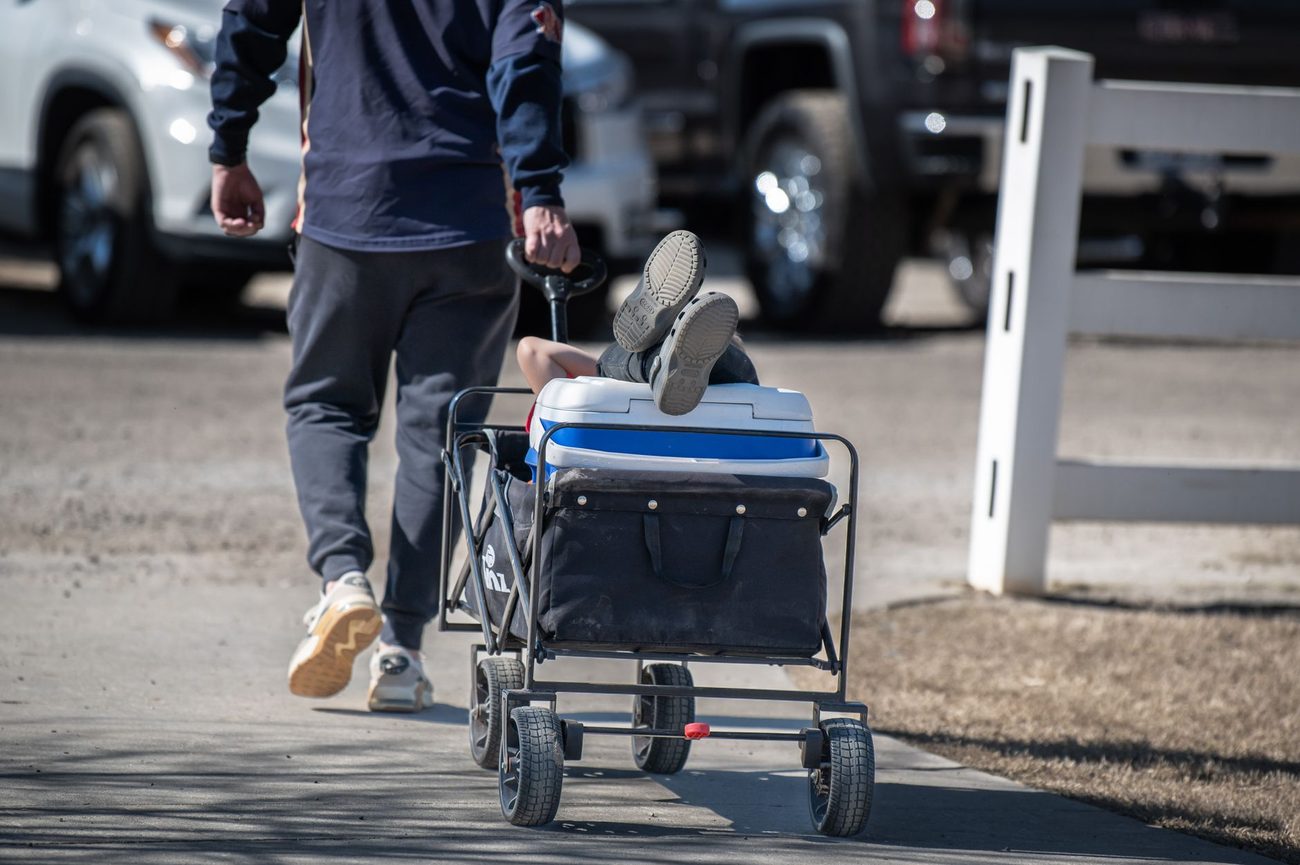
Three bags a day. That was the ice math with our old Coleman 70-quart on any warm trip, sometimes four. At around $3.50 a bag, we were spending about $12 a day keeping hot dogs cold, and by the second afternoon the hot dogs were floating anyway, along with a block of cheese that had become a sponge.
On Saturday, May 17, we finally bought a real cooler: an RTIC 45, a thick-walled hard cooler, for $189. With the Smokies trip four weeks out and Elkmont a drive from the nearest store, it felt like the right time.
How I figured the savings
I went back through the trip log, the green notebook in the Pilot's glove box where every receipt gets written down. On cool trips, ice barely matters. Long Pine Key in January cost us $9 in ice for two nights at 47 degrees. Hot trips are another story. On our warm weekends, the old cooler ate about $12 a day.
From what we'd read and what friends told us, a cooler like the RTIC should get us down to about $5 a day in the same heat, mostly because the ice lasts several days instead of one. That's $7 a day saved.
- $189 divided by $7 is 27 hot cooler days to break even.
- The Smokies trip has about 9 of them (the cabin has a fridge for two nights).
- Our family doesn't tent camp in Florida summers, so we don't rack up many hot days in a year.
So on ice alone, this cooler pays for itself in roughly two summers. I want to be honest about that, because the ice wasn't the only reason we bought it.
What we're really paying for
Dry food, for one. The old cooler turned everything into soup. Fewer ice runs, for another. At Elkmont, every bag of ice means a drive, and every drive means loading kids, and loading kids is never five minutes. And less wasted food, which on an 11-night trip adds up faster than ice does.
It isn't perfect. It's heavy even empty, and loaded with food and ice it's a two-person lift for Dana and me. The latches take a real pull, which Nico considers a personal challenge. And the walls are so thick that it holds less than its outside size suggests. The big-name coolers we looked at cost about twice as much, and I couldn't make that math work for a family that camps maybe eight times a year.
Our first test is running in the carport right now. Saturday night I pre-chilled it with a single bag of ice. Sunday morning I dumped that, loaded two fresh bags and a couple of frozen water jugs and left it in the shade, where it's been hitting 88 in the afternoons. As I write this on Tuesday, there's still a solid layer of ice in there. The old cooler would have been a bathtub by Monday afternoon.
What we'd tell our cheap-cooler selves
- Pre-chill it. A warm cooler melts your first bag of ice just cooling itself down. One sacrificial bag the night before is worth it.
- Freeze blocks at home. Old juice jugs filled with water and frozen last much longer than cubes, and they become drinking water later.
- Use two coolers when there's room. The kids open the drinks cooler about 40 times a day. The old Coleman has a new job as the drinks cooler, so the food cooler stays closed.
- Keep it in the shade with a towel on top. It sounds silly. It works.
- Bag anything that hates water. Even good ice melts eventually.
My own mistake: I didn't measure the Pilot's cargo area before buying. It does fit, with about an inch to spare, after I moved the bins around twice and said some things under my breath in the carport.
The old Coleman isn't going anywhere, by the way. It still has sand in the drain plug from Fort De Soto last May, and nobody in this family is willing to be the one to clean it out.