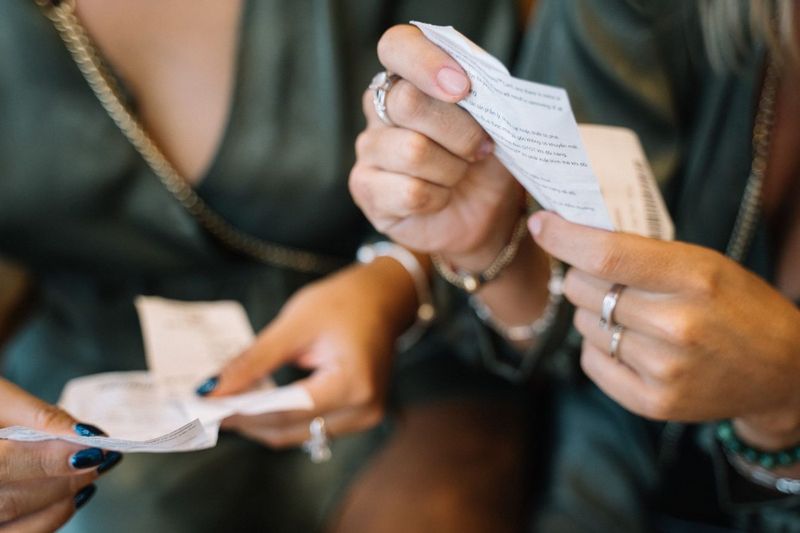
Last Tuesday I was cleaning out the Pilot's driver-side door pocket and found a crumpled receipt for $11.86, two LED bulbs and a pack of fuses from February, the week we were getting the camper ready. It had never made it into the trip log. That made me wonder how many others hadn't, so on Sunday afternoon I emptied the glove box, the kitchen junk drawer and the folder in the storage room onto the dining table and added up everything the camper has cost us since we bought it on January 31. A few of the receipts still smelled like sunscreen.
Every cost, line by line
- The camper, from a retired couple in Homestead who asked $6,500: $5,800
- Tax collector, sales tax $398 plus title, registration and plate $133: $531
- Hitch receiver and wiring on the Pilot, installed at U-Haul: $642
- Ball mount and 2-inch ball: $38
- Two new trailer tires, mounted: $236
- Wheel bearing parts (Rafael did the labor in his driveway): $48
- New deep-cycle battery: $129
- Propane tank exchange, since the old one was past its requalification date: $24
- Camco leveling blocks, chocks, water pressure regulator, hose and the 30-to-15-amp dogbone adapter: $96
- Canvas cleaner, seam sealer and repair tape: $41
- Progressive, February through September at $15.50 a month: $124
- AAA upgrade from Classic to Plus RV ($189 minus the $97 we were already paying): $92
- Replacement tire and a new spare after the blowout near Tifton: $241
- ADCO cover: $149
- Small parts: fuses, LED bulbs, a spare crank handle, a cabinet latch and a water filter: $130
Total: $8,321. Of that, $5,800 is the camper itself, $1,785 is what it took to make a 2009 camper ready to tow, from the tax collector through the canvas kit, and $736 is everything since.
The ones I forgot
Before Sunday, the number in my head was about $7,900. The gap was almost all stuff that never felt like buying anything:
- Small parts, $130. Twelve receipts, none over $30. Each one felt like nothing. Together they cost almost as much as the cover.
- Insurance, $124. It drafts with our car policy, so I never see it go out.
- The AAA difference, $92. Paid once in February and forgotten. It turned into the best $92 on this list on June 14, when the tow outside Tifton cost us nothing.
Camp math
We've slept 18 nights in the pop-up since February: Long Pine Key 2, Bahia Honda 3, Jonathan Dickinson 2, Vogel 4, Tallulah Gorge 2, Grayton Beach 3 and Pennekamp 2. Maya's birthday sleepover in the side yard doesn't count, though she'd like it to.
On paper, $8,321 over 18 nights is $462 a night, which would make it the most expensive lodging this family has ever paid for. That isn't quite fair, because we still own the camper. If I guess we could sell it for $5,000 (a guess, based on what we saw while shopping in January), the real cost so far is $3,321, or about $184 a night. It drops with every trip. Four nights at St. George Island in November would bring it to about $151, if nothing else breaks. Something else will break.
For comparison, the rented pop-up at Myakka last November cost $435 for three nights, $145 a night, delivered and set up by Gary. So our own camper still costs more per night than renting did. But that rental came to one park on one weekend. Ours sits in the side yard, ready the morning a cancellation opens up somewhere good.
What isn't in the total
- Gas for towing. It's in each trip's total, where it belongs. Towing takes the Pilot from about 22 miles per gallon to 15.5, and that shows up in every trip since February.
- Gear we'd use without the camper: the Blackstone griddle ($149), the two rod combos ($58) and Maya's new camp chair ($34).
- The ground anchors and straps from August, about $60, which I filed with the house storm supplies. Dana still says that's creative accounting. She has a point.
- Wear on the Pilot. It's gone from 88,700 miles on New Year's Day to about 97,700 now, plenty of them towing. The timing belt is due around 105,000, and we're budgeting about $1,100 for it early next year. It was coming anyway, just a little sooner now.
If we bought another used camper tomorrow, I'd set aside about 30 percent on top of the price for making it road-ready, check the spare before the first tow instead of on the shoulder of I-75, and buy the cover in February instead of August. When I asked Dana whether she'd do it again at $8,321, she answered before I finished the question: "Eighteen nights and nobody was cold or sweating through a sleeping bag. Yes."