"If the alligator climbs on the boardwalk, whose boardwalk is it then?"
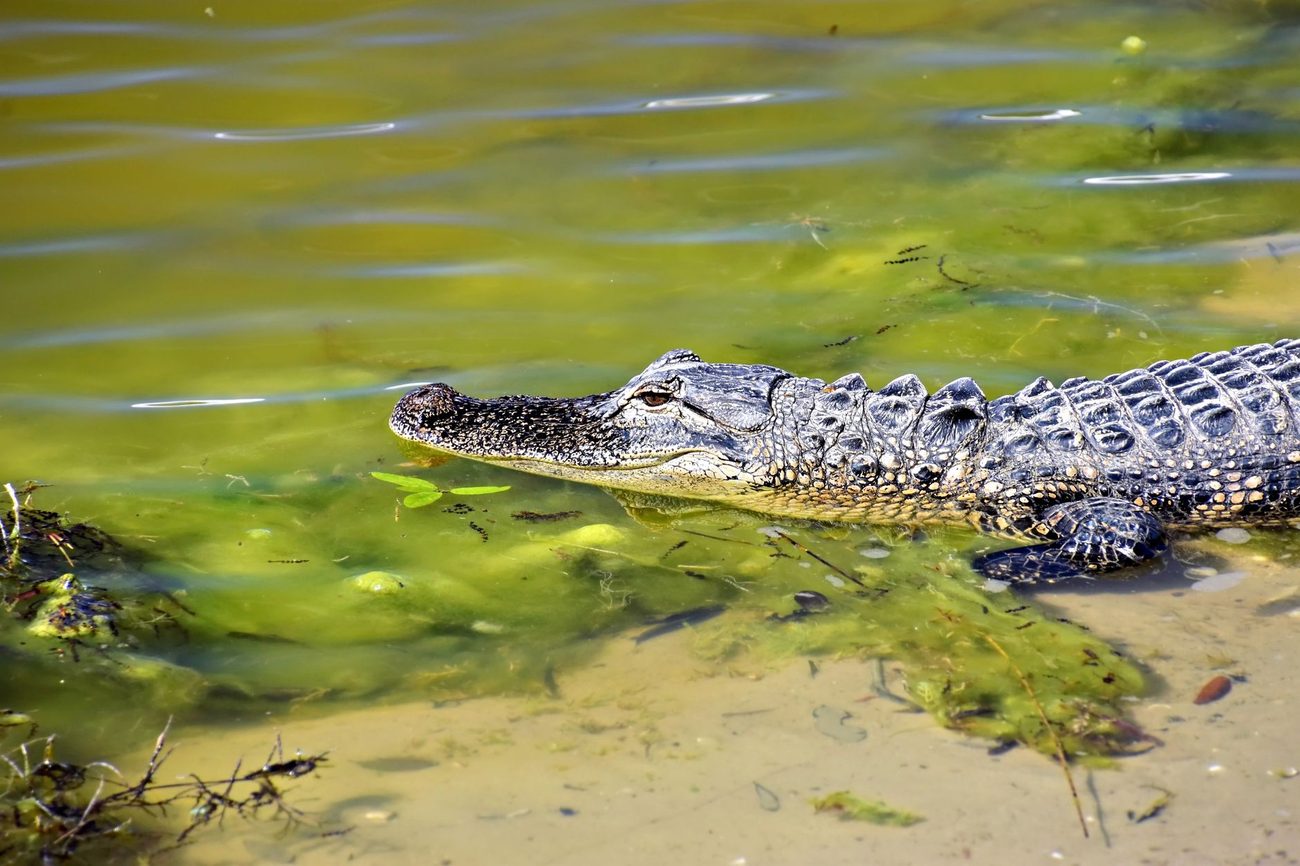
Nico asked me that at Myakka River State Park two weeks ago. He was standing on the bridge over the river with his chin on the top rail, and about 20 feet below him a gator was lying in the shallows doing absolutely nothing. He's six. He always asks the question behind the question.
Kids who grow up in Miami see alligators the way kids in other places see deer. Ours have spotted them from the car on the road to Shark Valley, behind glass at Zoo Miami and stretched out a few feet from the Anhinga Trail boardwalk near Long Pine Key. So they aren't scared. That's exactly what worries me. A gator seen from a moving car is scenery. A gator ten feet from a campsite at dusk is something else, and I want both kids to feel the difference.
The talk, the same way every time
We give it in the car before every trip to a park with water in it, which in Florida means every trip. It takes about two minutes. Six years of teaching middle-school PE taught me that kids remember short rules said the same way every time, so the words don't change:
- Feet on the boards. On a boardwalk or a bridge, you stay on it. No climbing the rail, no sitting on the edge with your legs hanging over.
- A school bus away. If a gator is on land, you stay at least a school bus length from it. If it hisses or opens its mouth, you were already too close, so you back up slowly.
- Nothing goes in the water. No food, no sticks, no rocks, no "just to see if it moves." Feeding a wild alligator is against the law in Florida, a fact both kids find thrilling.
- Edges are for daytime. At dusk and after dark, we stay off the shoreline and walk the road or the path, not the grass by the water.
- Swim where the park says swim. Not in a river because it looks clear, not in a lake because other people are in it.
None of this is original. It's our version of what park signs and rangers have told us, boiled down for a six-year-old. Every park has its own posted rules, and the rangers know their gators far better than I do, so we read the sign at the trailhead too.
How Nico tests every rule
Maya, who is nine, follows the rules and then enforces them on her brother with the energy of a hall monitor. Nico treats each rule like a fence he needs to walk along, looking for gaps.
At Myakka he put one sneaker on the bottom rail of the bridge and announced that he was "still on the boards" because his other foot was. Rule one now includes the word "both." Later, in his role as the family's kindling manager, he showed up with a perfect dry stick and asked if he could drop it near the gator by the boat ramp, "not to hit it, just to see." That one got a flat no from all three of us at once.
Rule two led to a real question: how long is a school bus? Maya told him about 40 feet, and he insisted on pacing it out on the campground road. It came to 16 of my steps and 27 of his, and he spent the rest of the weekend counting steps out loud every time anyone pointed at the river. He was counting from a distance, which was the whole point.
What changes at a campground
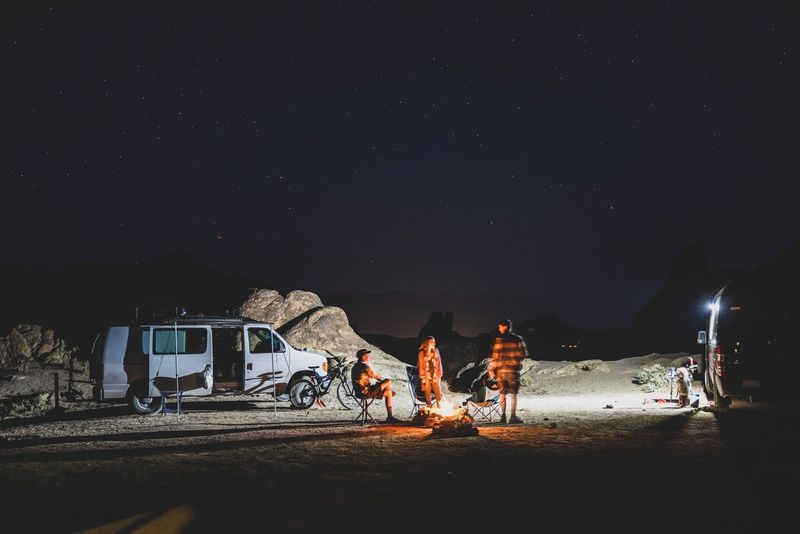
A boardwalk is easy: there's a railing between you and the gator. A campground is fuzzier, because the water is right there and everyone is relaxed.
So the campground version adds a few things. Food lives in the Pilot or the cooler, never on the picnic table overnight, which mostly protects us from raccoons (one stole our bread on our very first trip in 2023, and the kids still bring it up). Dishes get washed at the site, never rinsed at the water's edge. Night walks to the bathhouse happen on the road with a headlamp, and we sweep the light ahead of us. At Myakka, Dana and Maya stood on the bridge after dinner and counted pairs of reddish eyes glowing back at them from the river. They got to eleven before Maya decided that was plenty of information for one night.
That moment did more than any rule I've written. Eleven pairs of eyes in water we had walked right past at lunch. Nobody needed a lecture after that.
Next up: a walled spring
We leave for Ocala on Wednesday for Thanksgiving at my parents' house, then two nights at Juniper Springs in the national forest. The swimming area there is a spring pool with stone walls around it, and the water stays about 72 degrees all year. We'll still give the talk in the parking lot before anyone puts a toe in.
Nico already has his question ready. He wants to know if alligators like cold water, and whether 72 counts as cold. I told him we'd ask a ranger, and he wrote "ASK RANJR" on the back of his hand in marker so he wouldn't forget.